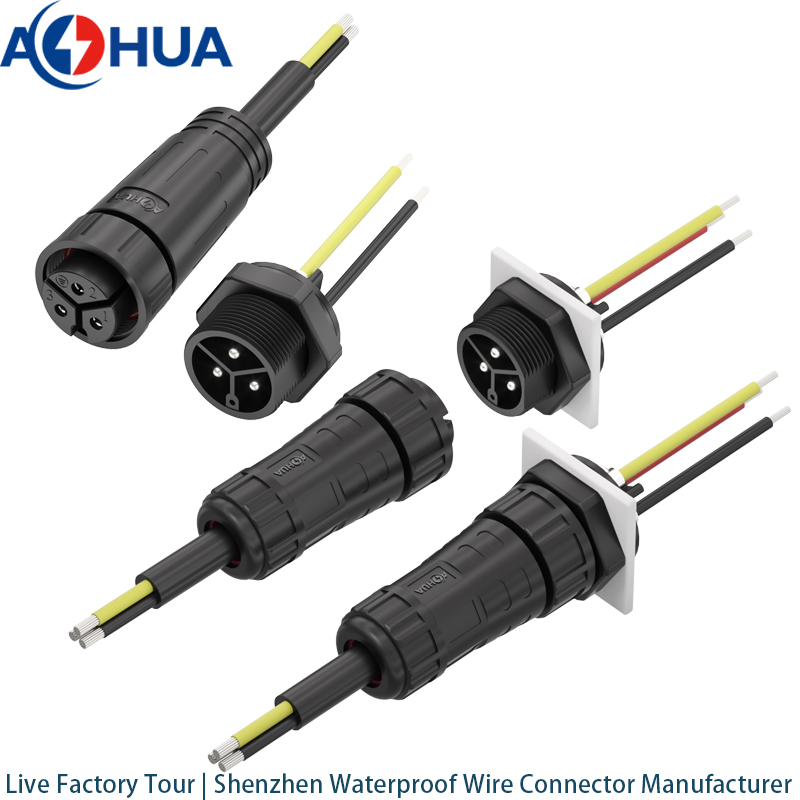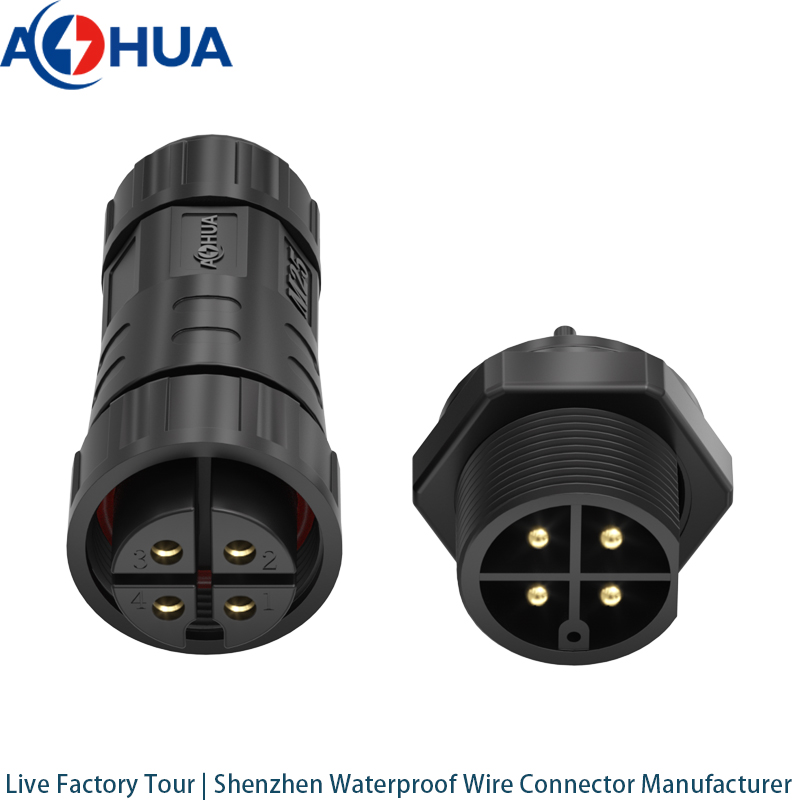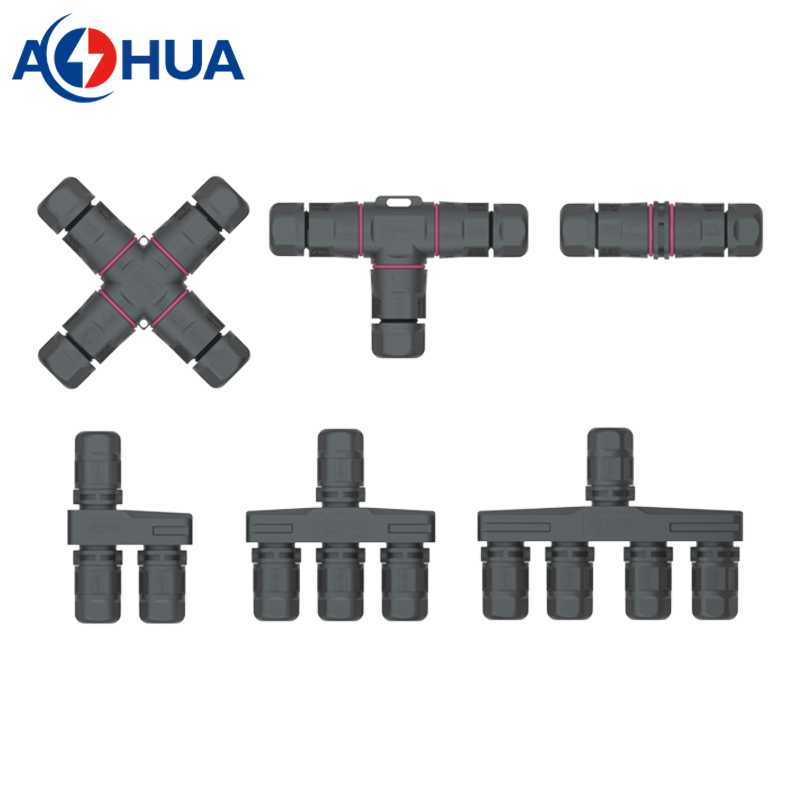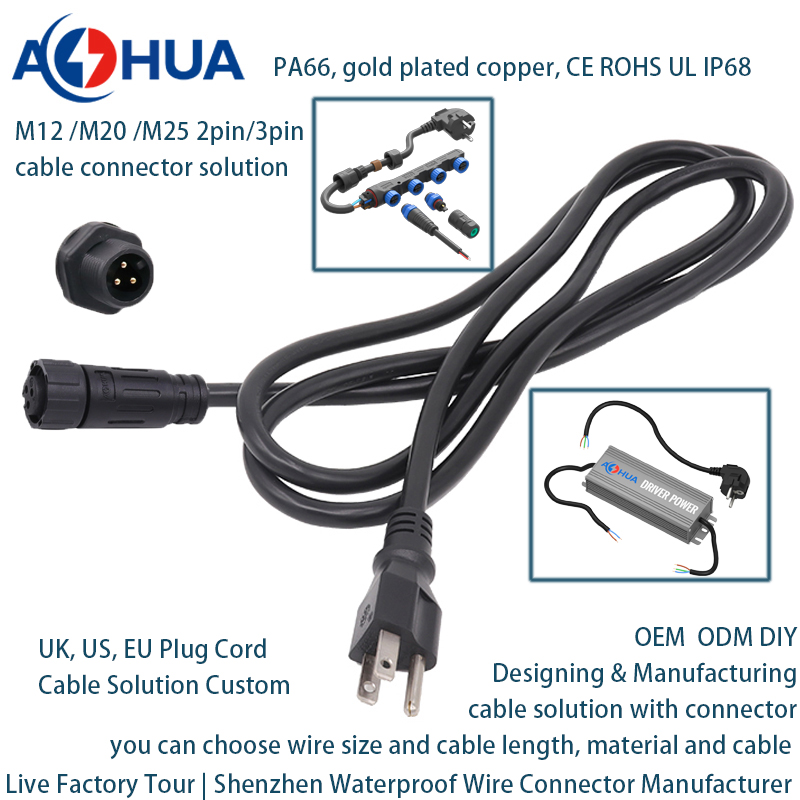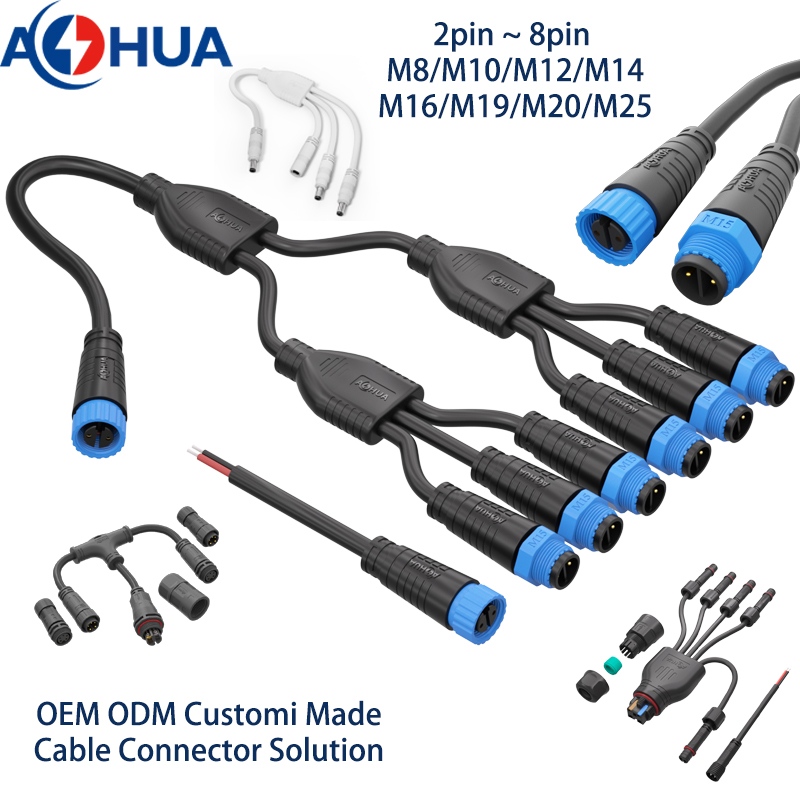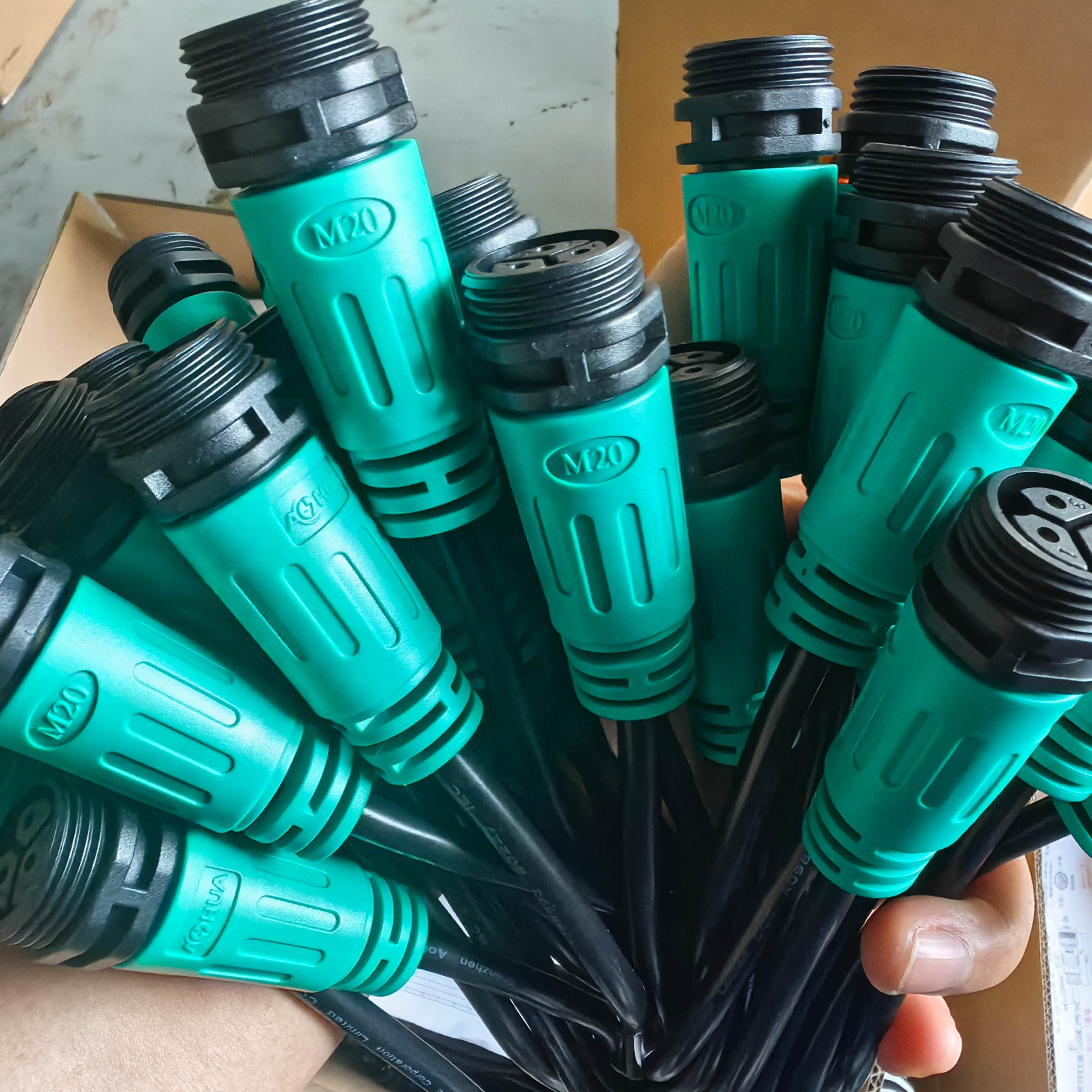


The Rising Tide of Connectivity: An AOHUA Perspective on the Waterproof Connector Market & Supply Chain
In an era defined by electrification and automation, the humble connector has evolved from a simple accessory into a mission-critical component. At AOHUA, we understand that in harsh environments where moisture, dust, and vibration are constant threats, reliability isn’t just a feature—it’s a prerequisite. This article provides an overview of the booming waterproof connector industry and dissects the supply chain dynamics shaping our competitive landscape.
1. Industry Overview: Riding the Wave of Global Growth
The global appetite for robust connectivity solutions is surging. Valued at approximately USD 13.4 billion in 2024, the worldwide waterproof connector market is projected to reach USD 25.48 billion by 2033, growing at a CAGR of 7.4%. This growth is fueled by defense applications, offshore energy, and the rapid expansion of industrial automation.
China, a powerhouse of manufacturing and innovation, is outpacing this global average. In 2024, the Chinese market reached between RMB 12–18.7 billion, with growth rates hovering between 8% and 12.5%. We anticipate the market will hit RMB 17.3 billion in 2025. The primary catalysts? The booming New Energy Vehicle (NEV) supply chain, the accelerated deployment of photovoltaic (PV) and energy storage projects, and sweeping upgrades in industrial automation equipment.
From IP65 to the rigorous IP68 and IP69K standards, the demand for higher protection ratings is transitioning from a premium option to a standard requirement, particularly in new energy commercial vehicles and heavy machinery.
2. Supply Chain Analysis: The Anatomy of Value
The waterproof connector industry follows a classic three-tier structure: Upstream Raw Materials, Midstream Manufacturing, and Downstream Applications. Understanding this flow is key to appreciating the technical barriers and value distribution within the sector.
Upstream: The Foundation of Performance
Raw materials account for 50%–60% of total manufacturing costs, making them the single largest determinant of profitability.
Conductive Metals: Copper alloys (brass, phosphor bronze) dominate contact terminals, representing 65%–70% of metal costs. For extreme environments, specialty alloys like copper-nickel (C7025) and titanium are essential.
Engineering Plastics: While general grades like PA66 and PBT enjoy high self-sufficiency (~78%), high-performance plastics like LCP and PEEK are critical for high-frequency transmission. Notably, domestic LCP production now holds a 45% market share, signaling rapid material substitution.
Sealing Materials: Fluororubber (FKM) and Liquid Silicone Rubber (LSR) provide the “waterproof” in waterproof connectors. Domestic production rates for these materials exceed 75%, providing a stable local supply base.
Midstream: Where Technology Meets Precision
This stage involves design, precision machining, and rigorous testing. The core barriers here are sealing structure design and reliability validation.
The global landscape features titans like the market leader (~15% global share) and strong German/Swiss benchmarks. However, the competitive dynamics are shifting. Domestic leaders like AOHUA are closing the gap. While international brands still dominate the ultra-high-end (IP68+, military-grade), Chinese manufacturers are transitioning from a “cost advantage” to a “technology + service” model. Customization and rapid response capabilities have become our core differentiators.
Downstream: The Engine of Demand
New Energy Vehicles represent the largest incremental market. As 800V high-voltage platforms become mainstream, the demand for connectors capable of handling 1500V withstand voltage and 400A+ current is exploding. Beyond automotive, rail transit, marine engineering, and 5G infrastructure continue to drive volume.
3. Trends Shaping the Future
As a player in this dynamic field, AOHUA observes five key technological shifts:
Higher Ratings as Standard: IP68/69K is becoming the baseline for quality outdoor equipment.
High Power Density: The move toward 800V architectures requires integrated liquid cooling and electrical connection designs.
Integration & Miniaturization: Interfaces are shrinking while integrating power, signal, and data transmission simultaneously.
Material Science: The shift toward PEEK and advanced fluororubbers to meet chemical and thermal resistance demands.
Digitalization: Utilizing digital twin simulations to shorten R&D cycles and predict sealing failures before they happen.
4. The Great Acceleration: Domestic Substitution
Perhaps the most significant trend is the rise of domestic brands. China’s market share in waterproof connectors is projected to jump from 35% in 2023 to over 45% by 2026.
Why the shift?
Policy Support: National initiatives prioritize supply chain security, favoring domestic suppliers in military and NEV sectors.
Cost Efficiency: Domestic products offer equivalent specifications at 30%–50% lower costs than imported alternatives.
Material Breakthroughs: Localized production of LCP and PEEK has reduced costs by 20%–30%.
While bottlenecks remain—particularly in ultra-precision machining equipment and extreme aerospace-grade validation—the trajectory is clear. Companies with vertical integration and in-house R&D, like AOHUA, are best positioned to capture this value.