

Outdoor Power Waterproof Connector | The Critical Link for Reliable Energy in Harsh Environments
When you’re installing solar arrays on a rooftop, wiring LED lighting along a coastal boardwalk, or connecting battery storage systems in an exposed field, what will determine the final triumph? Focus this, one component often determines whether your entire project succeeds or fails: the outdoor power waterproof connector.
It’s not the most glamorous part of the system, but it’s arguably the most vulnerable. And in outdoor power applications, vulnerability means downtime, safety hazards, and expensive callbacks.Even this component is the cheapest part of your whole solution.
Let’s break down why this matters—and why choosing the right waterproof connector is non-negotiable for modern outdoor power projects.
The Real Cost of a “Good Enough” Connector
Standard electrical connectors work perfectly well indoors. They sit in dry, temperature-controlled environments where moisture never threatens the contact points. But take that same connector outside, and the story changes fast.
Rain finds its way through gaps. Morning dew condenses inside the housing. Temperature swings cause expansion and contraction, slowly loosening connections. UV radiation degrades plastic housings until they crack. Salt spray from coastal air corrodes exposed metal contacts.
The result? Intermittent power failures. Short circuits that trip breakers. Corrosion that increases resistance and generates heat. And eventually, complete system failure that requires tracing back through miles of cabling to find the failed joint.
This is why outdoor power waterproof connectors exist. They’re engineered not just to resist these conditions, but to survive them—year after year.
What Sets a True Outdoor Waterproof Connector Apart
Not every connector labeled “waterproof” delivers the same protection. The critical differentiators come down to three factors:
IP Rating: IP67 means dust-tight and protected against temporary immersion. IP68 goes further—sustained submersion at specified depths. For outdoor power applications exposed to heavy rain, flooding, or pressure washing, IP68 is the minimum standard.
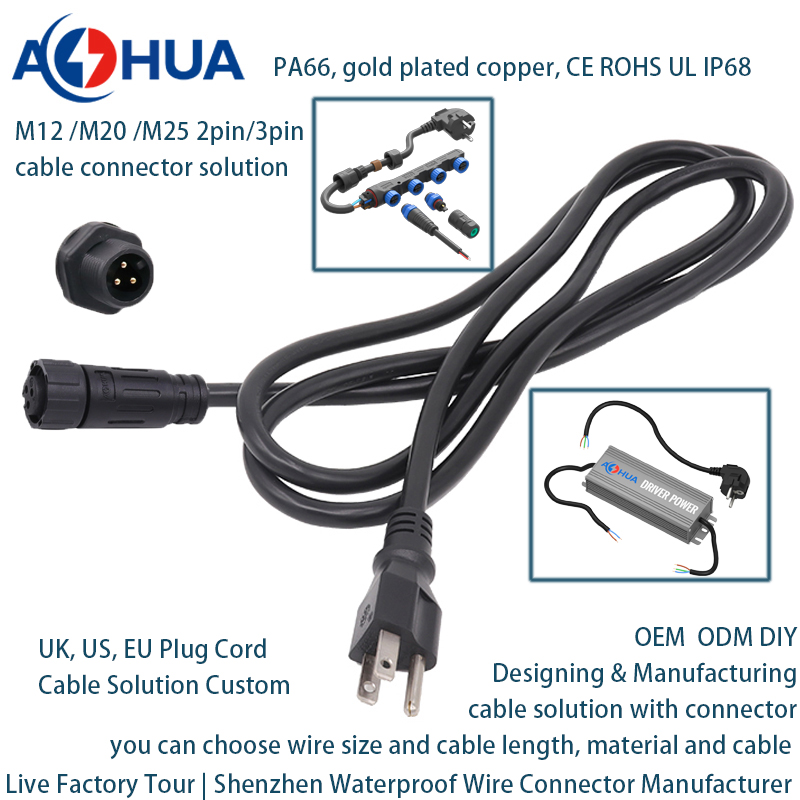
Material Selection: PA66 nylon housing provides the strength and UV resistance needed for long-term outdoor exposure. Gold-plated contacts resist corrosion far better than bare copper or tin, especially in saltwater environments.
Sealing Design: Multiple O-rings, compression seals, and threaded locking mechanisms create barriers that standard push-fit connectors simply cannot match.
The global watertight connector market reflects growing awareness of this need, projected to grow from US$1.096 billion in 2025 to US$1.772 billion by 2032—a compound annual growth rate of 7.0%.

Three Critical Applications Where Quality Matters Most
1. New Energy Photovoltaic & Energy Storage Systems
Solar installations are the ultimate outdoor power application. Panels sit on rooftops or open fields, exposed to everything the weather can throw at them. Battery storage systems often sit alongside, equally vulnerable.
In these systems, waterproof connectors handle DC power from panels to inverters, and from inverters to storage. Any connection failure means lost generation and potential safety issues. The renewable energy sector’s explosive growth—with photovoltaic connectors seeing adoption rates exceeding 47% in new installations—has made reliable outdoor power waterproof connectors mission-critical.
Modern energy storage systems demand connectors that maintain integrity through temperature swings from -40°C to 85°C while handling high currents reliably. This isn’t optional—it’s the difference between a system that performs for 25 years and one that fails within five.
2. Outdoor LED Lighting Engineering
From streetlights and tunnel lighting to landscape illumination and billboards, outdoor LED lighting is everywhere. And every single fixture needs a waterproof connection point.
The challenge? LED drivers are often mounted separately from fixtures, requiring cable runs that cross outdoor spaces. Each connection point is a potential failure point. IP67 and IP68-rated connectors provide the protection these installations demand, ensuring consistent illumination without the maintenance headaches of corroded or water-damaged connections.
The UL F1 rating—which certifies that plastic housings can withstand prolonged UV exposure, temperature fluctuations, and water ingress—has become increasingly important for lighting projects seeking long-term reliability.
3. Outdoor Power Equipment
Industrial equipment operating outdoors—pumps, compressors, control boxes, sensors—all require power and signal connections that won’t fail when conditions get rough.
These applications often demand more than just waterproofing. They need vibration resistance, strain relief, and locking mechanisms that prevent accidental disconnection. Heavy-duty outdoor power connectors with threaded couplings and positive latching systems address these requirements directly.
Why AOHUA’s Approach Matters
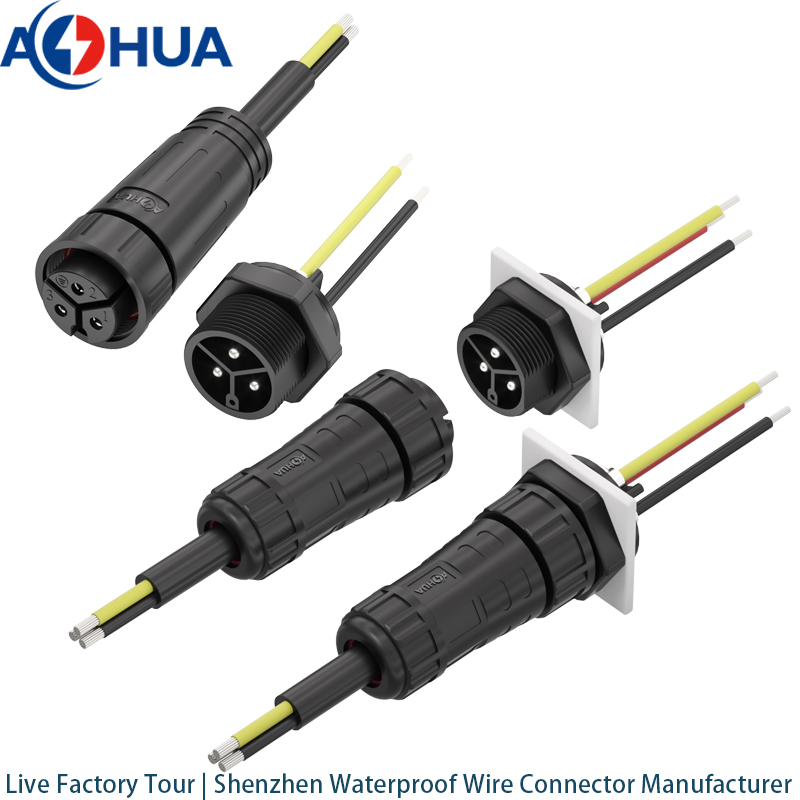
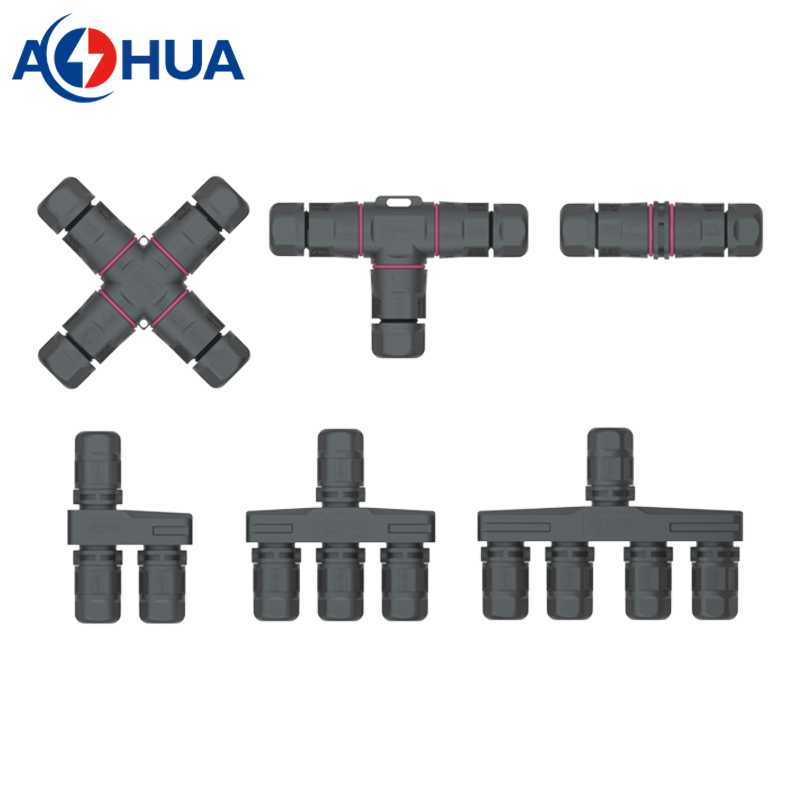
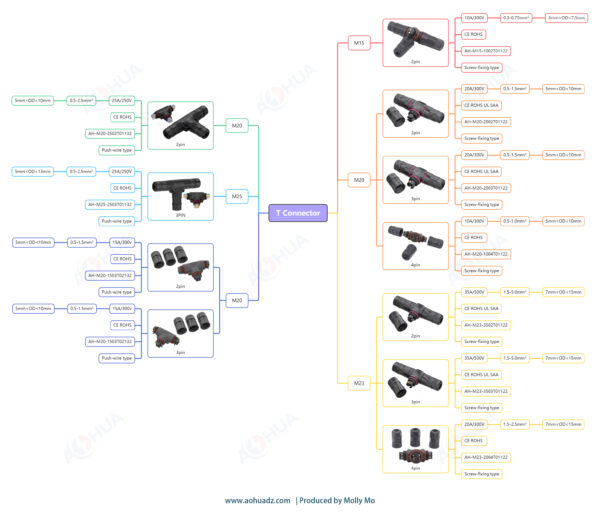
With over 20 years of R&D and manufacturing experience, AOHUA has built a comprehensive line of outdoor power waterproof connectors that address these exact challenges. From IP67 nylon power cable joints with self-locking mechanismsto IP68 T-splitters handling 25A for outdoor power distribution, the product range covers the full spectrum of outdoor application requirements.
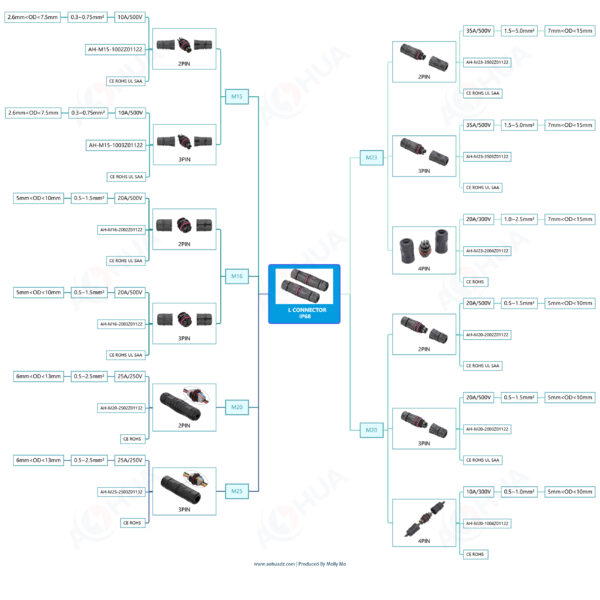
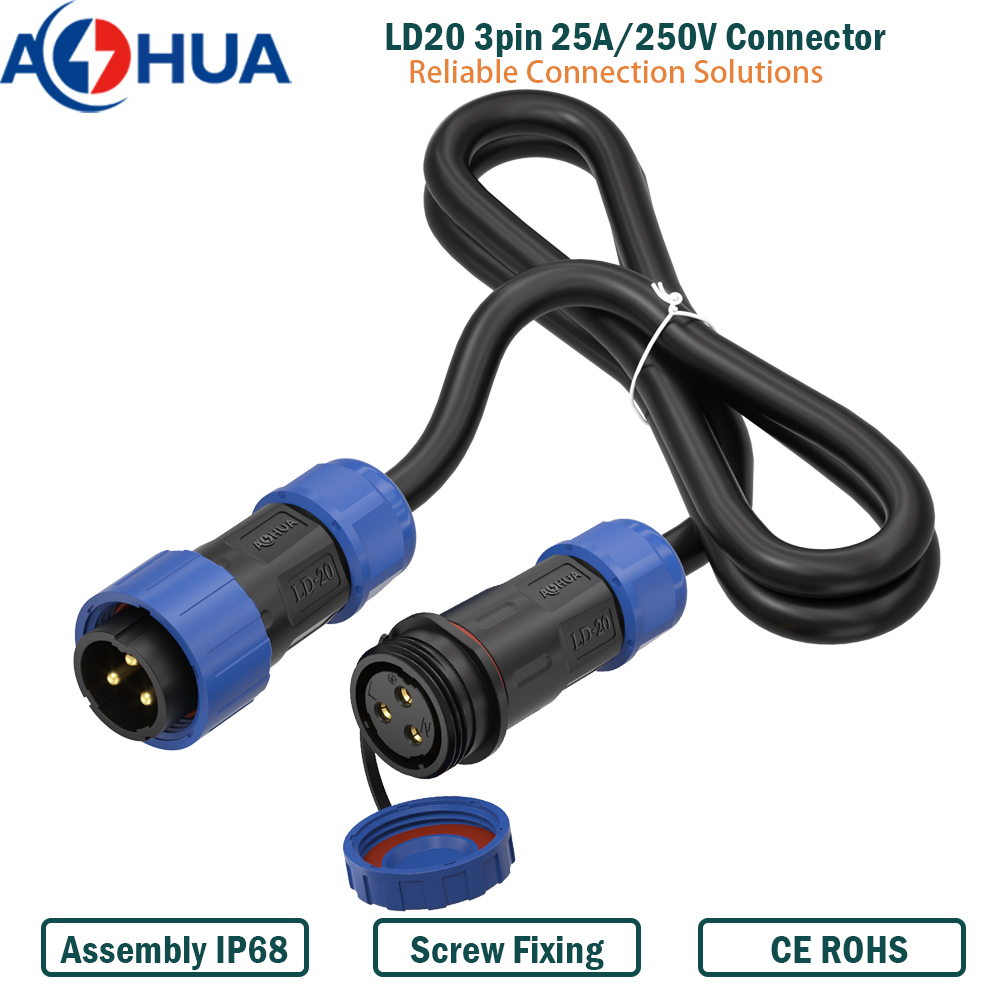
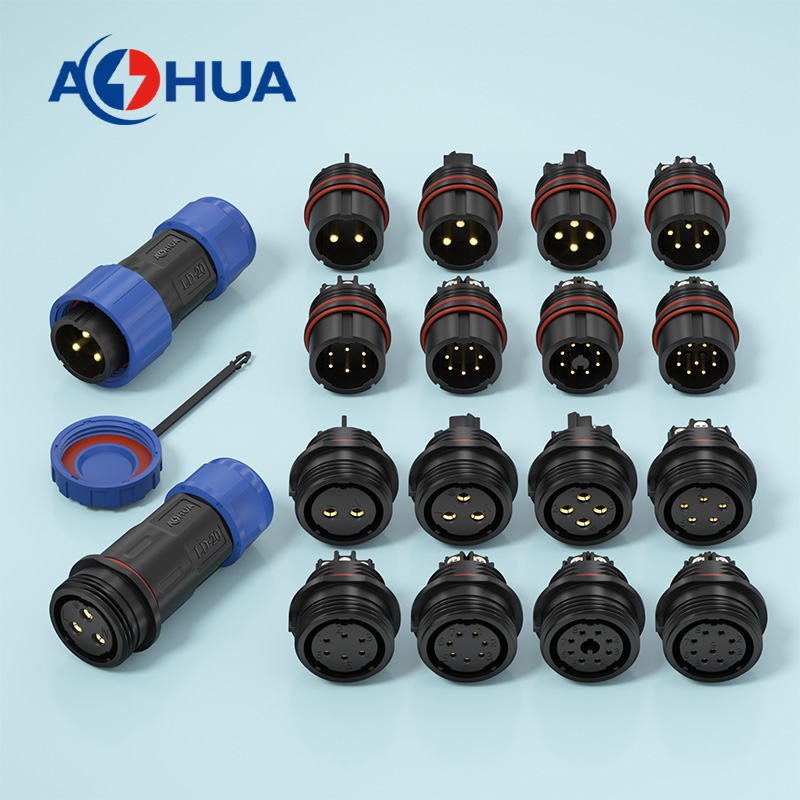
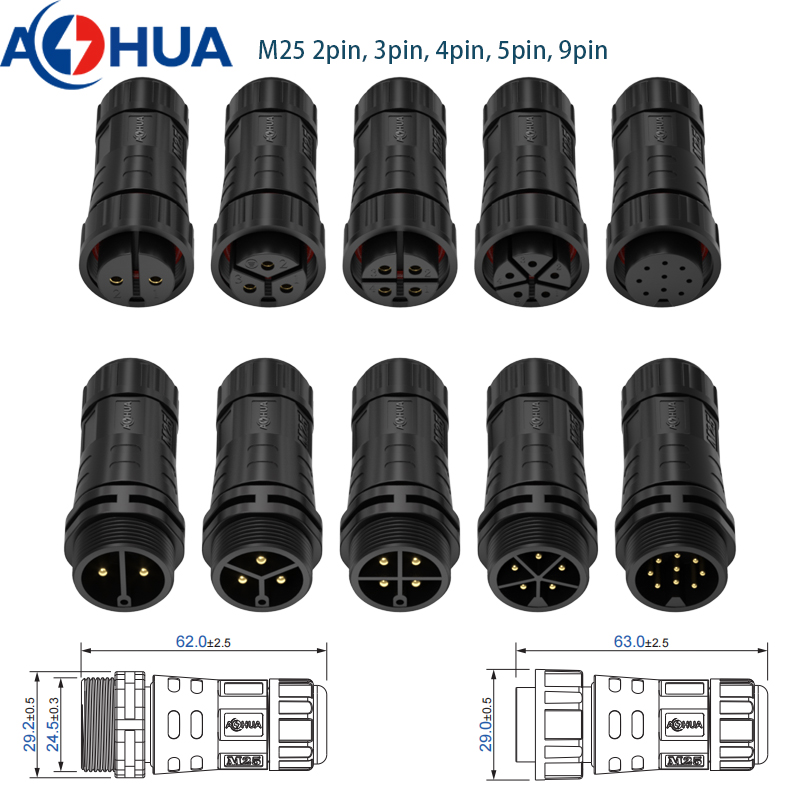
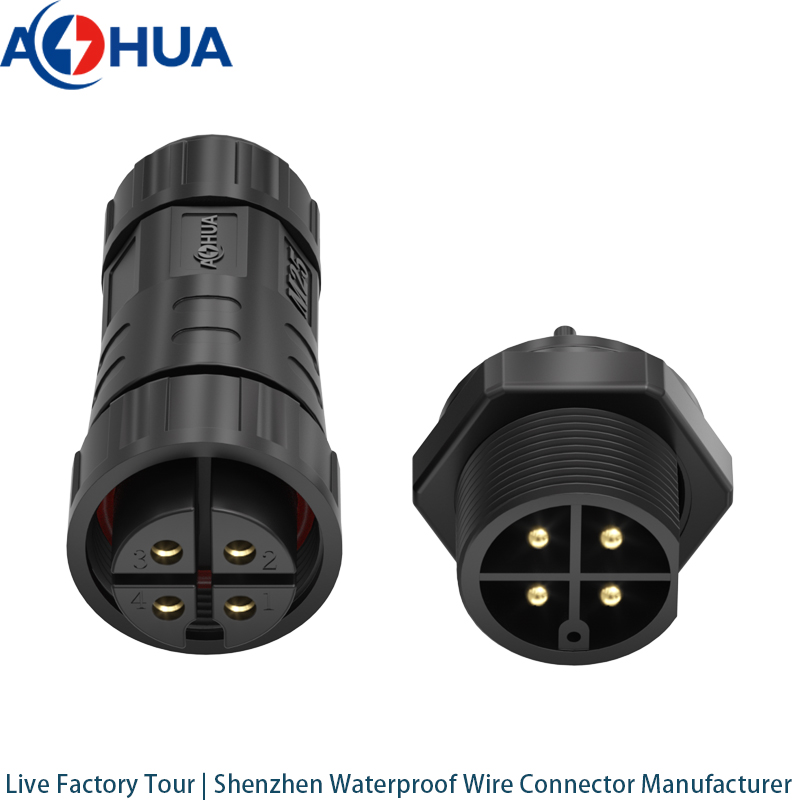
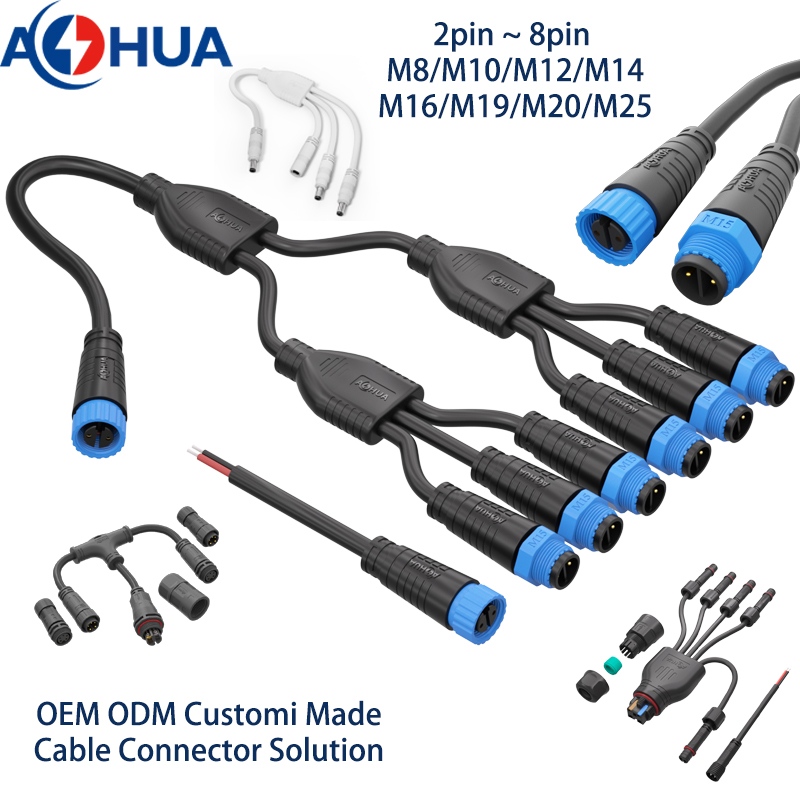
The M16, M20, M23, and M25 series connectors offer threaded locking, multiple pin configurations, and robust sealing that stands up to outdoor conditions. CE, RoHS, and UL certifications ensure compliance with international standards. Besides, we also have many series waterproof connectors, as for your power waterproof connector for outdoor, we can design and manufacture cable solution DIY for you.
Outdoor power projects are expensive, complex, and built to last decades. The connectors you choose should match that timeline. Cutting corners on outdoor power waterproof connectors isn’t saving money—it’s investing in future failures.
Whether you’re designing solar farms, LED lighting networks, or industrial outdoor equipment, the right waterproof connector makes the difference between a project that performs and one that fails. And in outdoor power, failure is never an option.